Wednesday, May 04, 2005

Keizan Zenji's Temple, Yokoji.

Yokoji was perhaps our most important ‘discovery’ in researching this visit. In the short biography of Keido Chisan Koho Zenji in the Shasta Press edition of ‘Soto Zen’ it is called by an alternative name of ‘Eiko-ji’ so we were a little slow to realise just how important this temple was to our direct Dharma Family.

Yokoji is the temple where Keido Chisan was ordained by Koho Hakugan and trained as a young monk in the 1890’s. He was later the 512th abbot of the temple. It is located in the hills behind the small town of Hakui half way up the west coast of Noto – the peninsula that sticks out northwards into the sea of Japan about half way along the coast of the main island of Honshu. This is the original heartland of Soto Zen practice in Japan

Yokoji is also a very important place in the wider transmission of the Soto tradition. We usually think of Sojiji as being Keizan’s most important temple but actually Yokoji was his main place of practice during his own lifetime – the first he established in 1312 and also where he is buried.

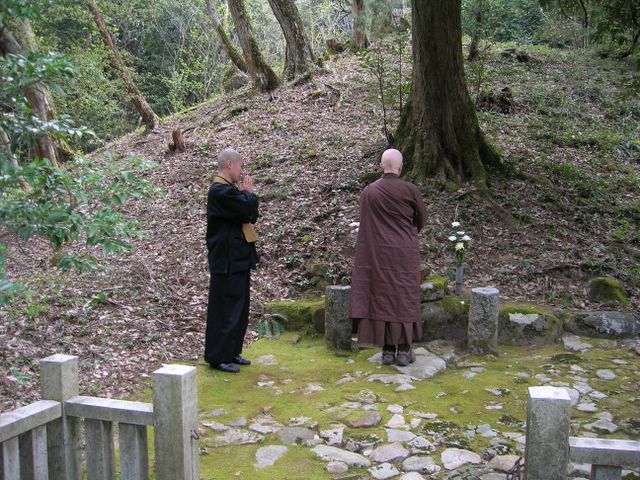
There is also a unique place of pilgrimage at Yokoji – the Gohoro. This is a mound on the hillside behind the temple containing relics associated with five Ancestors in our tradition - Tendo Nyojo, Eihei Dogen, Koun Ejo, Tettsu Gikai and Keizan Jokin.

Only the gatehouse survives of Keizan’s original buildings but the plan of the temple follows the classic form of the original with the Hatto directly ahead as you pass through the entrance and the meditation hall and bell tower to the left and administrative buildings and kitchen to the right.
By Iain.


Mr. Gouda in the back row is in charge of the temple office. The five people here basically run and maintain the temple, Rev. Koho lives in a nearby town and comes to the temple each day.

Celebrating a memorial at the Gohoro,

I just love this picture so I put it in for the record.

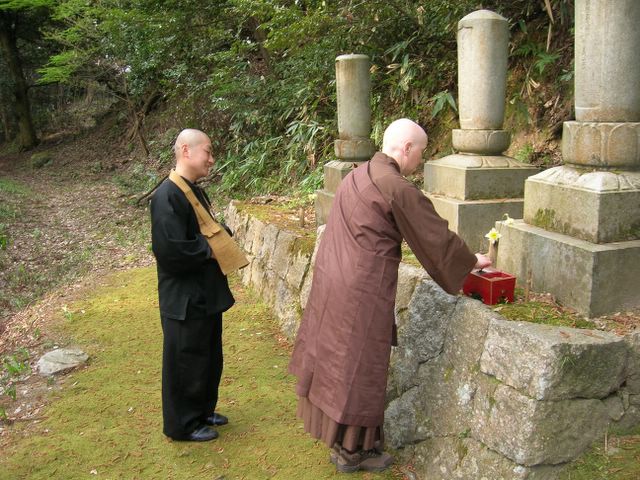
We did a memorial for Koho Zenji, Rev. Koho assisted.

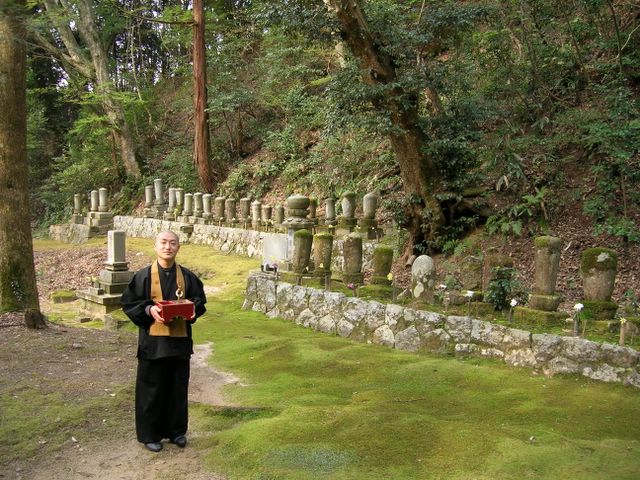
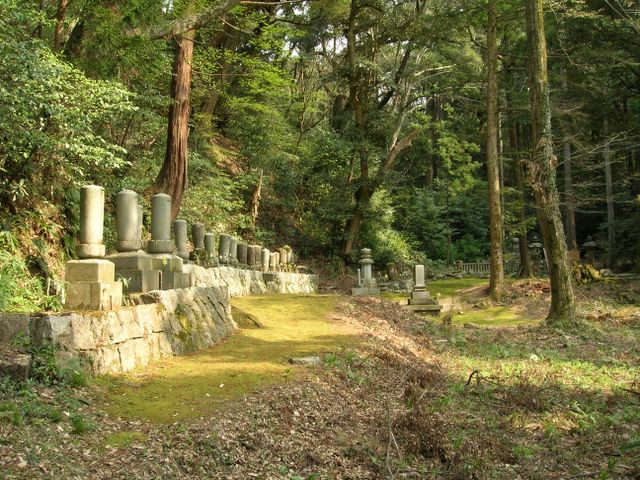
Memorial stones for past abbots and Zen Master Keizan's grave in the distance to the right.

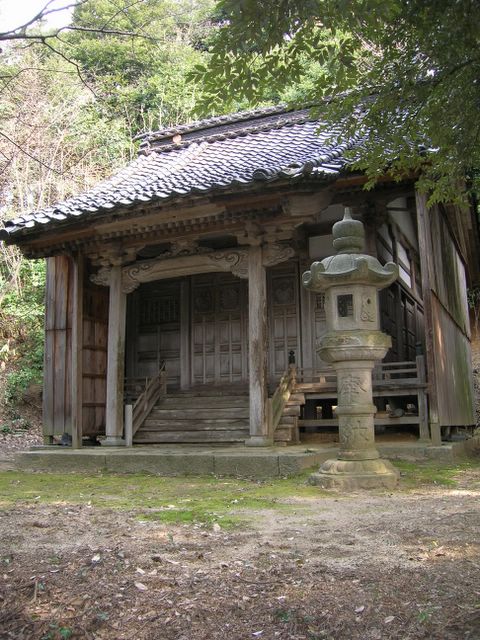
Looking down on the temple compound from the little temple in the woods.

Temple in the woods.

Dogen Founded Eiheii-ji in 1243.

In the late summer of 1243 Dogen was invited by local disciples to establish a temple in Echizen, the province where Eiheiji is. At that time he moved his growing community of monks from the capital area of Kyoto up to a beautiful and remote mountain valley. Over the subsequent centuries Eiheiji has expanded into one of Japan’s largest monastic communities whose main buildings and halls are tiered up steep hillsides and connected by long staircases protected against the winter snows. The climates of Shasta Abbey and Eiheiji are rather similar.

Eiheiji is now a huge international institution, accepting more than 200 new trainee monks every year. Typically they study here for a minimum of two years after university before returning to a home temple. Visitors are looked after in a large guest building with comfortable Japanese-style tatami rooms and are able to join in the schedule during their stay.
By Iain.


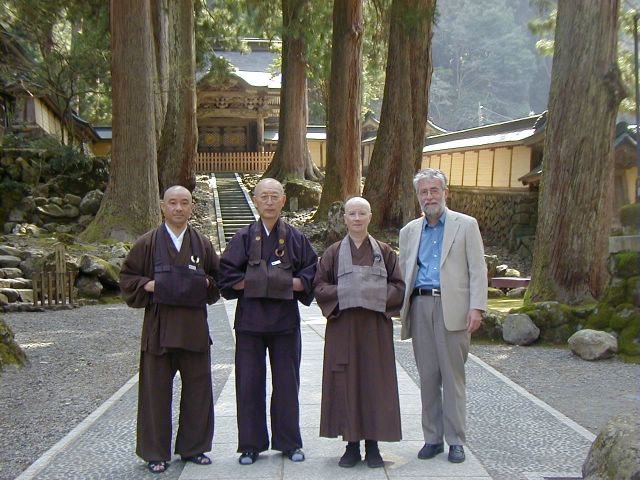
From left to right, Rev. Kuroyanagi (International Department), Rev. Matsunaga Roshi (Assistant Administrator), Mugo and Iain.